
José Rey Toledo (June 28, 1915 – April 1, 1994) was a renowned documentary artist from Jemez Pueblo, New Mexico. His Towa name, Sho-bah’-won-hon, means Morning Star. Known for his extraordinary attention to detail and knowledge of traditional attire and ceremony, José Rey painted from memory to record the events and dances with care, respect, and historical importance. As a young adolescent, José Rey attended the Albuquerque Indian School and demonstrated his natural ability for drawing and documentation. His artistic techniques emerged from the modernist Pueblo painters, especially Fred Kabotie and Velino Shije Herrera of the early 1900’s. Collectors and museums quickly acquired José Rey’s watercolors for his meticulous representation of Puebloan culture and his definitive style. José Rey Toledo’s paintings turned visually stunning anthropologic and ethnographic data into authentic fine art.
At the age of 31, José Rey won First Place at Philbrook in 1947 for Dancing Sprits, a breathtaking illumination of the Zuni Shalako ceremony. His original watercolors and prints are also found at the Smithsonian Museum of the American Indian and Smithsonian American Art Museum. Additionally, museums across the country hold his intricate work in their collections.
José Rey Toledo married his high school sweetheart, Amelita Toya, and together they raised eight children on tribal lands in New Mexico and the Dakotas. José Rey earned his BA and MA from the University of New Mexico and worked in Indian Health for his professional career. He later received a master’s degree in public health from the University of California at Berkeley. Once retired, José Rey focused on his painting, and Amelita excelled as a traditional potter. José Rey’s artistic talents extended into storytelling, singing, and acting, including the Chief in The Legend of the Lone Ranger in 1981 and Redfoot in Lucky Luke in 1991.
Artist’s Website: NDNSpirit.com
Instagram & FaceBook: @NATIVEDAUGHTERSNATIVESPIRIT
Prints commissioned by Artist
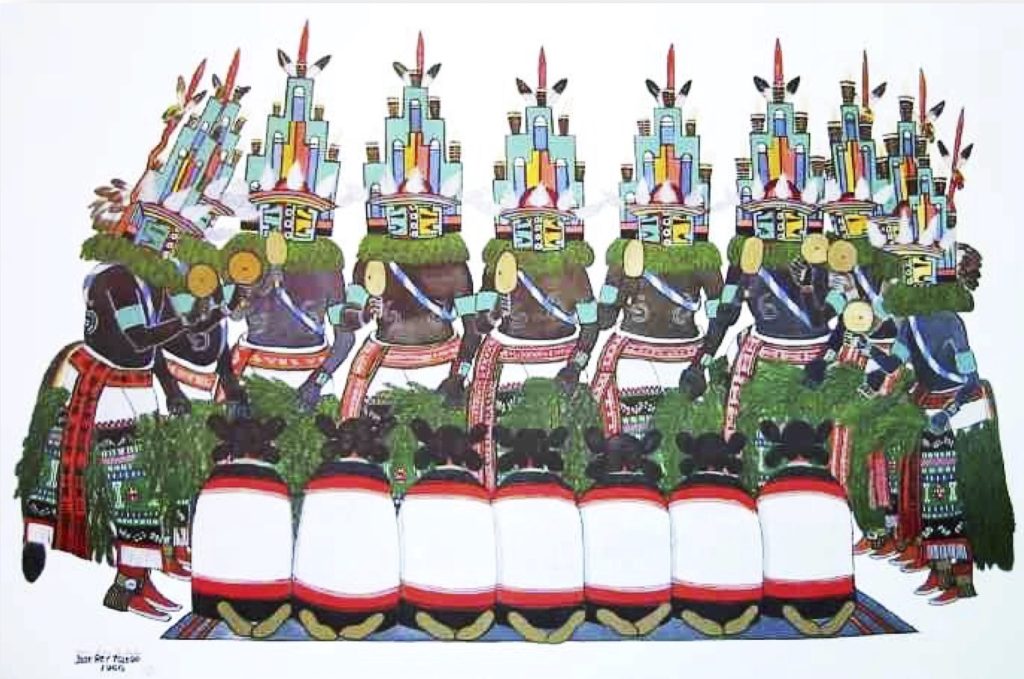
“The Niman kachina dance is celebrated by the Hopi people. The Niman Ceremonial is the last of the kachina visitations and held during the summer. Also called the home dance, the ceremony is the final dance before the kachinas return home to the San Francisco Peaks in Flagstaff, Arizona.”
~José Rey Toledo 1977
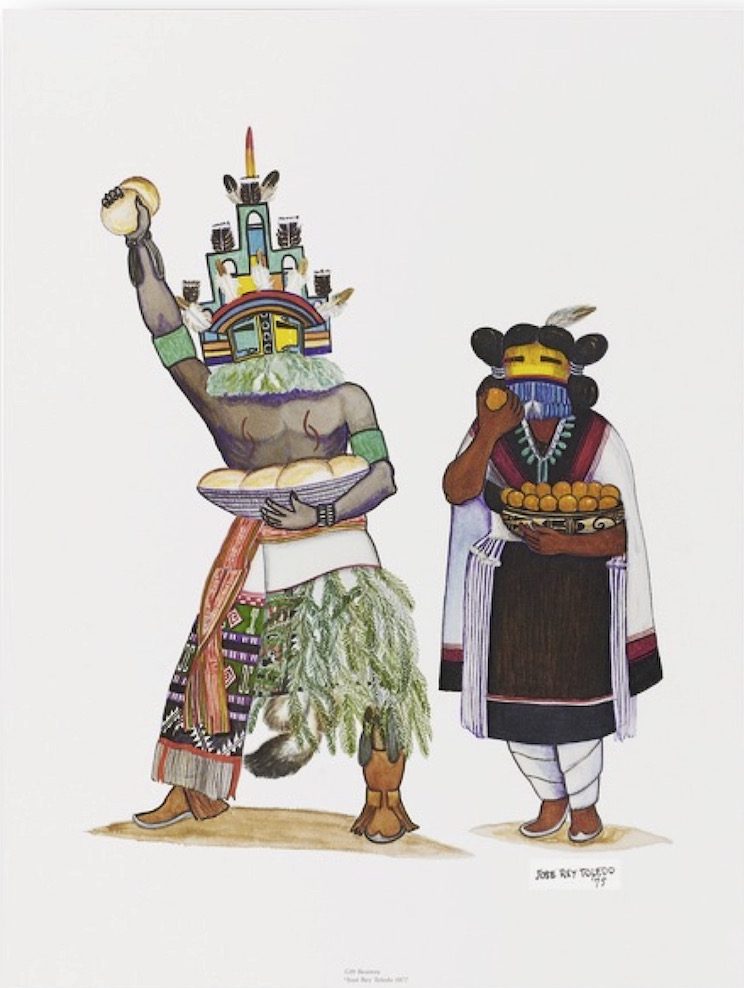
“The Niman gift bearers give fruit, dolls, bows and arrows to the spectators, as gestures of blessings from the spirits. They assure the Hopi Indians that all good deeds are rewarded.”
~José Rey Toledo 1977
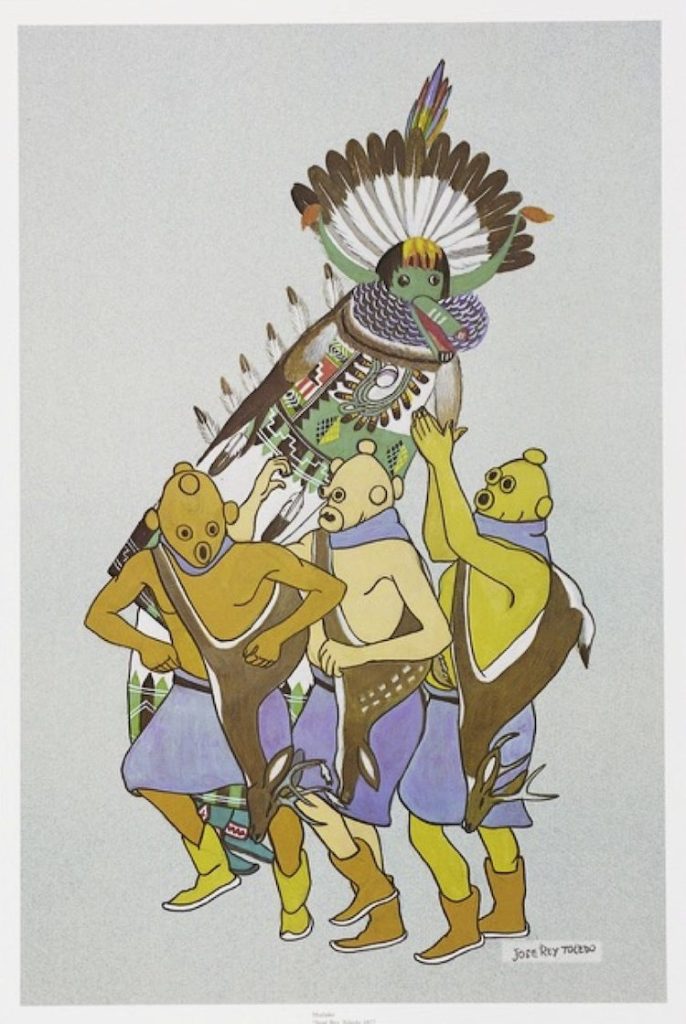
“Kachinas are a representation of the spiritual world that communicate abstract messages through song and dance. One of these kachinas is the Shalako. Each winter the Shalakos visit the Zuni Pueblo in New Mexico where they bless new homes or additions to existing homes.”
~José Rey Toledo 1977
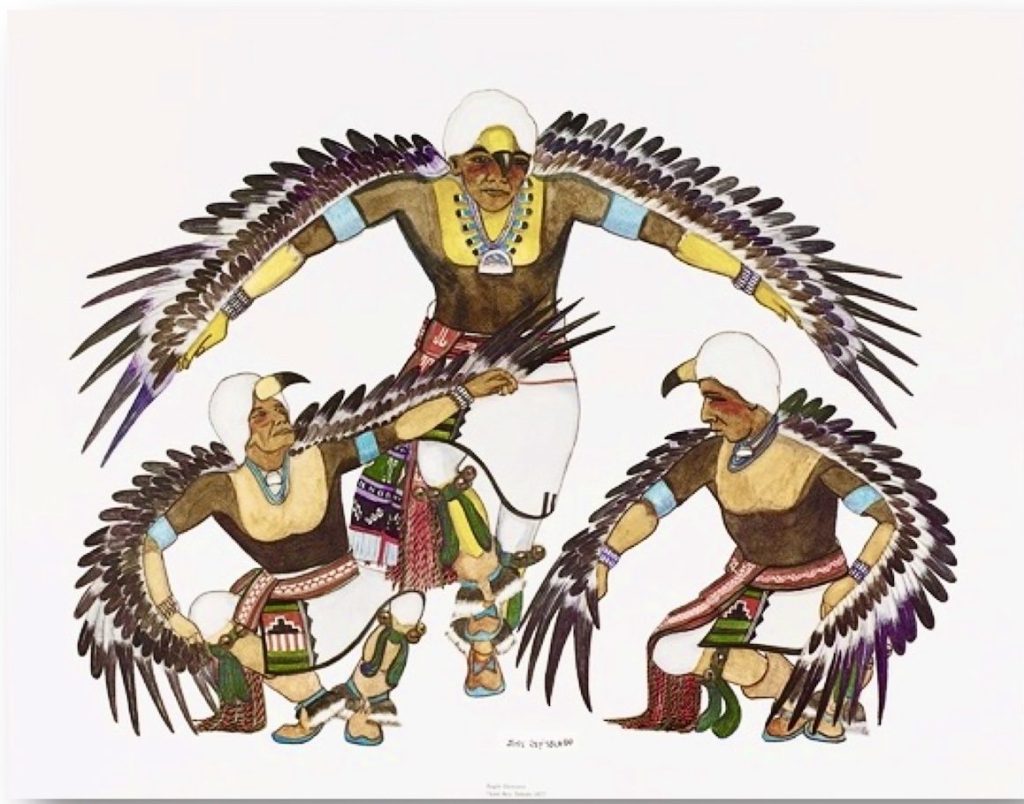
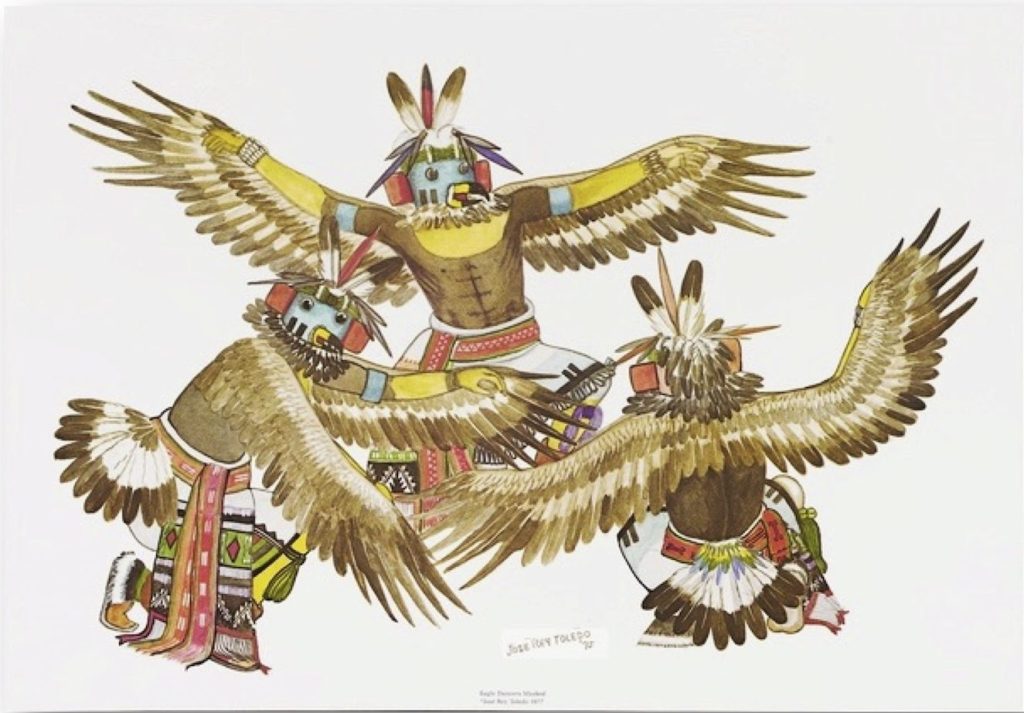
“The performers’ rhythmic ‘prayer’ gestures are a petition to the Great Spirit for acuity of vision. The bird is a messenger between the powers of the sky and the people of the earth.”
~José Rey Toledo 1977


You must be logged in to post a comment.